Louis-Joseph Daumas
1801-1887
Statue of a Horse (Cheval piaffant en liberté [Horse Trotting at Liberty])
1864
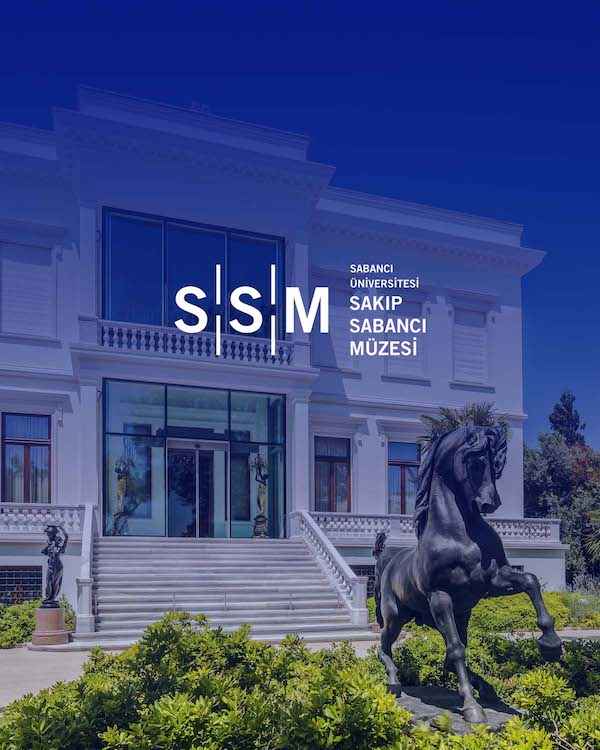
The bronze horse statue placed in front of the Atlı Köşk [literally translated as ‘Mansion with the Horse’] is one of twenty-four animal statues commissioned by Sultan Abdülaziz (r. 1861–1876) from the French sculptor Pierre Louis Rouillard (1820–1881) in 1864. Early in his reign, Sultan Abdülaziz appointed the architect Sarkis Balyan (1835–1899) to rebuild Beylerbeyi Palace, which had burned down in 1851. To decorate the palace gardens, the sultan consulted the French merchant and court decorator Monsieur Percheron, who recommended Rouillard—then acclaimed for his sculptures created for the newly built and restored wings of the Louvre during the 1850s.
To complete this ambitious commission, which comprised horses, bulls, lions, tigers, and deer, Rouillard worked with several collaborators. According to contemporary accounts in the French press, Rouillard prepared detailed designs for each sculpture. These were submitted for Percheron’s approval before being realised by Rouillard and his associates, in strict adherence to the original designs. However, greater creative latitude was granted to Isidore Jules Bonheur (1827–1901), who sculpted the two bulls, and Louis-Joseph Daumas (1801–1887), responsible for the two horses; both esteemed sculptors of their day. Commissioned in March and completed in October 1864, the group consisted of ten marble and fourteen bronze sculptures, all transported from Paris to Istanbul.
Once installed in the gardens of Beylerbeyi Palace, the collection was soon dispersed. During the reign of Sultan Abdülhamid II (r. 1876–1909) several sculptures were relocated to Yıldız Palace. Photographs by the court photographer Basile [Vassilaki] Kargopoulo (1826–1886) show a stag, a doe, a bull, and a horse positioned in front of the Yıldız Chalet Kiosk’s main greenhouse. Of these, the ‘Fleeing Stag’ remains in Yıldız Park, the ‘Doe Drinking Water with Fawn’ is in Emirgan Park, and the ‘Fighting Bull’ has been a landmark of the Altıyol square in Kadıköy since 1987. The horse captured in Kargopoulo’s image is the same sculpture now standing in the garden of the Sakıp Sabancı Museum, in front of the mansion.
Following their time at Yıldız Palace, the horse and bull statues were relocated to the Bilezikçi Farm, also known as the Abraham Paşa Farm, a large estate in Büyükdere. Owned in the early twentieth century by Enver Paşa (1881–1922) and his wife, Naciye Sultan, the estate was later acquired by Mahmud Muhtar Paşa (1867–1935) and his wife, Princess Nimetullah. Although the exact timing and circumstances of the statues’ removal from Yıldız Palace remain unclear, it is likely that they were moved shortly after Sultan Abdülhamid II was deposed in 1909, and transferred to the property of Enver Paşa, one of the leading figures in the Committee of Union and Progress.
Münevver Ayaşlı (1906–1999), who visited the farm during Mahmud Muhtar Paşa’s ownership, recalls in her memoir ‘Dersaadet’: ‘The estate had not only a delightful wood but also a lovely and charming farmhouse, as well as very precious bronze animal statues. The horse, bull, and deer statues especially were of exceptional beauty.’ These sculptures were later moved to the garden of Mahmud Muhtar Paşa’s Marble Mansion in Moda. Following the owners’ deaths, the mansion was acquired by the Ministry of Education in the 1950s and subsequently served as the Kadıköy Girls’ High School. The furnishings of the house were sold at an auction held on 25 August 1956 by the family’s heirs: Hacı Ömer Sabancı purchased the horse statue and Vehbi Koç acquired the ‘Helpless Stag’, now on display at the Divan Hotel in Taksim.
The horse sculpture currently situated in front of the Atlı Köşk is one of the two ‘Cheval piaffant en liberté’ [‘Horse Trotting at Liberty’] listed in Rouillard’s original order. Its counterpart remains in the Beylerbeyi Palace gardens, in front of the Stable Kiosk, where it has stood since the reign of Sultan Abdülaziz. The plinth of the sculpture bears three inscriptions: on the left side, near the front legs, ‘P Rouillard Dir[ecteur]’ denotes Pierre Louis Rouillard’s supervisory role in the statue’s production; on the left rear, ‘Louis Daumas de Toulon (Var), Sculp[té] Paris 1864’ identifies the sculptor and the date; and on the right rear, ‘Fdu [fondu] par Vor [Victor] THIEBAUT’ records that the bronze was cast by Victor Thiébaut (1823–1888).
The horse is depicted mid-piaffe, with its front left leg raised, rendered in a highly realistic manner. Rouillard was known for his anatomical precision in life-size animal sculptures. His preparatory sketches for the Beylerbeyi group, drawn at a 1:5 scale, included detailed studies of animal bone structures, complete with measurements.
The sculpture’s French title, ‘Cheval piaffant en liberté’, derives from dressage terminology. The piaffe is a controlled, rhythmic trot in place, while ‘en liberté’ refers to a horse performing freely, without a rider. This demanding movement—requiring a high degree of skill from both horse and trainer—is here captured in bronze by Daumas.
Detail
Collection:
Dekoratif Eserler KoleksiyonuTitle:
Statue of a Horse (Cheval piaffant en liberté [Horse Trotting at Liberty])Artist:
Louis-Joseph Daumas
Date:
1864Dimensions:
yükseklik: 220 cm, genişlik: 295 cmMedium:
BronzeLocation:
Sabancı Üniversitesi Sakıp Sabancı Müzesi (Emirgan, İstanbul, Türkiye)Object Number:
400-0183Credit:
© Sabancı University Sakıp Sabancı MuseumRelated Works